Blog · AI Trends
This Was The Week In AI #35
Olaf Lemmens, Founder NinA AI Agency · June 15, 2026 · 7 min read
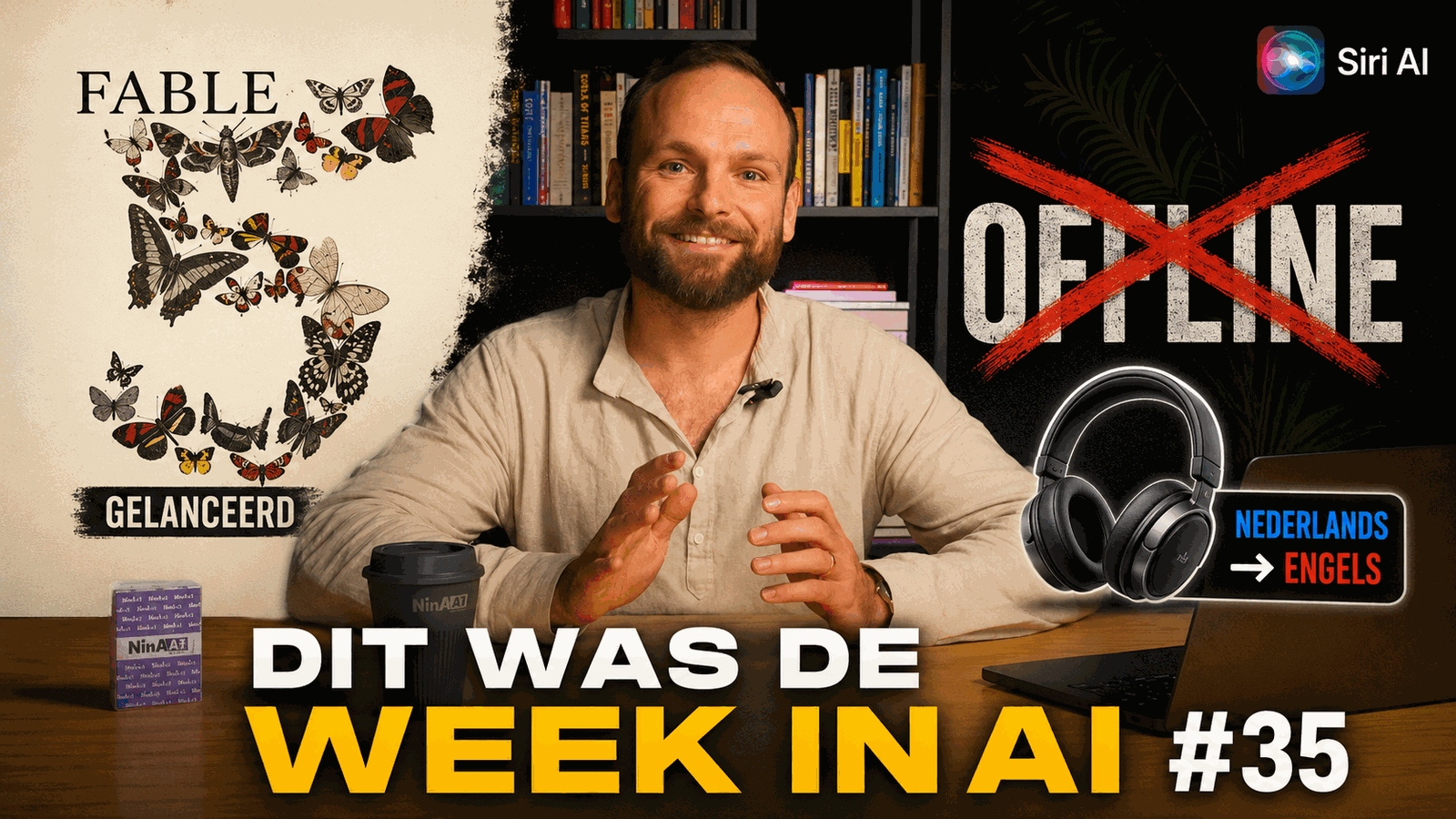
Last week brought news that may make this one of the most remarkable weeks in AI I have seen in a long time.
Anthropic launched their most powerful model ever and then watched the US government take it offline.
Google made real-time speech translation available to everyone, and Apple finally showed that they take Siri seriously.
Four big news stories, and the feeling that the world of AI is moving faster than ever.
In this newsletter I line it all up: what happened with Fable 5, why the government stepped in, what Google Translate can really do now, and whether Siri AI is more than marketing talk.
This was the week in AI #35.
TLDR;
Anthropic’s most powerful model appeared and disappeared within one week
Google Translate now translates live speech in 70+ languages
Apple rebuilt Siri completely, but the EU has to wait
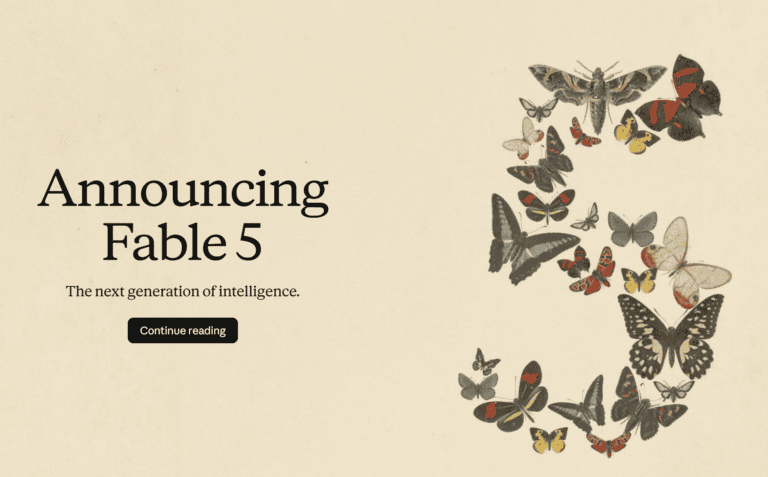
Anthropic went live with Fable 5
Last week Anthropic did something they had anxiously avoided until now: making their most powerful AI publicly available.
Claude Fable 5 was the first public model from the Mythos class. Before that you needed Project Glasswing, a select group of 150 partners. That preview turned out to be so capable that Anthropic deliberately kept it in house: the model was able to find vulnerabilities in virtually every major operating system and browser.
For the public version Anthropic built in a safety layer. Sensitive questions about cybersecurity or biology were routed to the older Opus 4.8. That happened in fewer than 5% of sessions.
The numbers were impressive
On the toughest test for real software engineering, Fable 5 solved well over a third more problems than GPT-5.5, and almost half more than Gemini 3.1 Pro. On the hardest coding challenges it scored five times higher. No public model had previously pushed that benchmark above 80%.
Stripe used the model and did in days what would normally take months.
Fable 5 was available in all paid subscriptions. For those who tried it: you now know what Mythos level feels like.
The US government pulled the plug on Fable 5
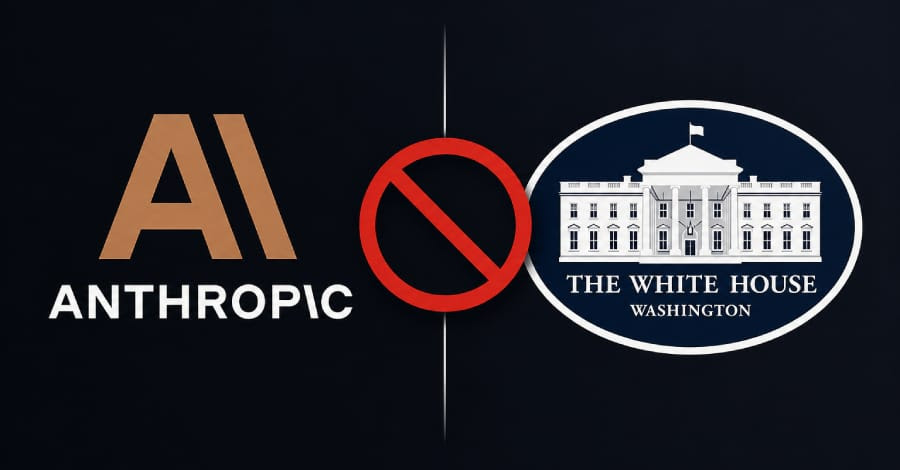
Three days after the launch of Fable 5, both models, Fable and Mythos, went offline worldwide. By order of the US government.
The reason: an “export control directive” that obliged Anthropic to deny access to all non-US citizens. Including Anthropic’s own foreign employees. Because there was no way to screen users by nationality, access was cut off for everyone.
The order came in on Friday at 17:21 ET. Within a few hours both models were dark.
The immediate trigger was a reported vulnerability. The model could apparently analyse code and expose software bugs. Anthropic called it a “non-universal jailbreak” and pointed out that GPT-5.5 can do exactly the same. After thousands of hours of red-teaming, nobody found a broad bypass.
The party that raised the vulnerability with the government? Amazon, one of Anthropic’s largest investors.
Semafor also reported that a China-linked group may have had access to Mythos. Details remain vague, but it was enough for Washington to intervene.
Anyone who built on Fable last week opened their laptop on Monday and found Opus 4.8. No return date, no alternative.
Anthropic warns that such a large recall over one small security problem could become a dangerous precedent for the future. New releases could be delayed as a result, industry-wide.
Dario Amodei has argued for AI regulation for years. That regulation is here now. Just not the way he imagined it.
Google Translate finally speaks fluently
Twenty years ago Google started machine translation as an experiment. Last week the company took the next step with Gemini 3.5 Live Translate, a model that translates speech in real time into more than 70 languages.
The difference from earlier systems: it does not wait until you have finished speaking. It translates while you talk, stays a few seconds behind the speaker and preserves intonation, pace and pitch. No robot voice, no awkward pauses.
The model rolls out today through the Google Translate app on Android and iOS. Developers can build with it directly through the Gemini Live API. And Google Meet gets it soon too: from 5 languages to 70+, with more than 2,000 language combinations in one conversation.
Grab is already testing the model for conversations between drivers and passengers. They make more than 10 million voice calls per month through the platform.
Android users also get a “listen mode”: phone to your ear, and you hear the translation directly through the earpiece. Without headphones, without others hearing it.
All generated audio is invisibly marked through SynthID, so AI speech remains detectable.
Practical, immediately usable and no hype: this is simply Google Translate finally working the way you always wanted.
Siri finally joins in
Apple introduced Siri AI last week: a completely rebuilt version of Siri, built on Apple Intelligence. After years of trailing Google Assistant and ChatGPT, Apple is now genuinely trying to catch up.
And honestly, it looks better than expected.
Siri now understands context. You can ask about “that restaurant tip Lisa sent me” or “my hotel confirmation from last month” and Siri finds it in your messages, mail and photos.
Siri also writes along. Describe what you need and it drafts something. It even adjusts the tone automatically based on how you normally communicate with that person.
On iPhone, Siri integrates directly into the camera. Photo of a bill? Siri splits it. Photo of a plate of food? Nutritional values straight on screen.
Available as a beta, later this year. Developers can test today, but ordinary users have to wait a while.
And: in the EU, Siri AI is not coming to iOS and iPadOS for now. The DMA again. Apple says it is “working hard on a solution”, but there is no date.
Siri could have been this five years ago. Then again, better late than never.
My take
Honestly: the Fable 5 story leaves me with mixed feelings.
Not so much because of the model itself, but because of what happened afterwards. A government withdrawing a fully public AI model within 72 hours over a vulnerability that competitors have too. That is a precedent the whole industry could suffer from.
Dario Amodei has argued for more AI regulation for years. Now he is getting it, but in the form of a phone call on a Friday afternoon at 17:21 and models going offline hours later. That is probably not how he meant it.
Something else that strikes me: Amazon, one of Anthropic’s largest investors, was the party that raised the vulnerability with the government. That is a remarkable move. Whether it was strategic or not, I will leave open.
With Google and Apple the story is calmer, but no less interesting. Google Translate now does something that seemed impossible five years ago: real-time speech translation preserving intonation and pace, in more than 70 languages. No big announcement, just: it works. That is how the best technology introduces itself.
Siri AI surprised me more positively than expected. Apple has failed to deliver on many promised AI features in recent years. This time the foundation looks solid. But I am deliberately keeping my enthusiasm in check: it is still beta, the EU is not getting it for now, and we have heard Apple announce before delivering more than once.
I hear the same from entrepreneurs and consultants in my network: the week felt chaotic. Good tools arrived, disappeared, or are not available yet. That is the reality of AI in 2026. Not everything that launches stays available.
Until next time,
Olaf Lemmens
Founder NinA AI Agency
P.S. Want to talk through how AI could work in your organisation? Or how tools like these could save you time in your work? Book an intro call through this link.