Blog · AI & Business
The 7 Phases of AI Implementation: From First Test to Automation
Olaf Lemmens, Founder NinA AI Agency · March 15, 2025 · 10 min read
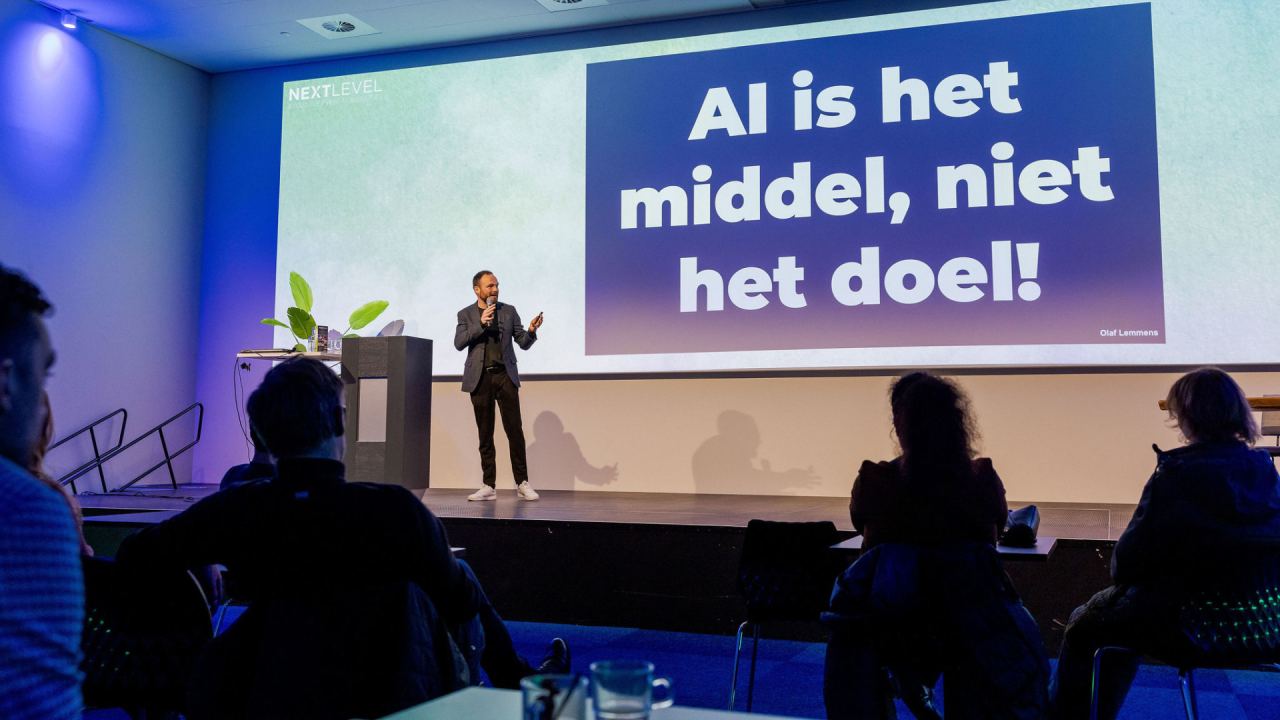
I gave multiple workshops again last week and that's always a great moment for me to see how things stand outside my AI bubble. Many people are still really in the discovery phase, while others are truly 6 steps ahead. So when I was driving back from a workshop, I came up with the idea for this newsletter. I quickly tapped ChatGPT's voice assistant and started sharing my ideas, which I later turned into this newsletter.
I'm curious which phase you're in!
What stands out is that most companies get stuck at the same points. They start enthusiastically with ChatGPT or CoPilot, but have no idea how to get from there to real value. Or worse: they immediately go for the most complex implementation without mastering the basics.
The truth? AI implementation progresses in phases, and each phase builds on the previous one. It's not a sprint but a marathon. Let me take you through what I call the "7 phases of AI implementation."
TL;DR:
- ▸Phases 1-3 are about understanding AI capabilities through language models, prompt engineering and testing specialized tools
- ▸Phases 4-6 focus on building AI solutions that evolve from simple GPTs to complex automation
- ▸Phase 7 is the ultimate step: developing custom AI models for specific business needs
Phase 1: Getting Acquainted with Language Models
Most people start here: experimenting with language models like ChatGPT, CoPilot, Gemini, Claude etc.
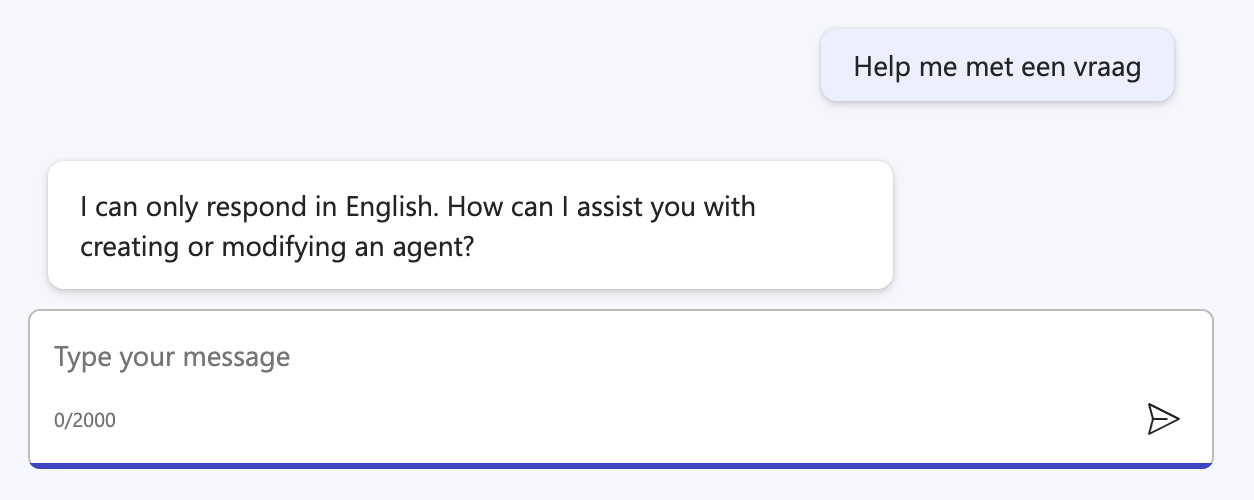
You type a question, get an answer and think: "Impressive, but how do I use this for my work?"
This is a crucial phase, even if it feels basic. You get to know the language models and build a mental model of their capabilities.
You discover they can write, analyze, brainstorm and summarize. But also that they sometimes hallucinate and aren't always reliable.
The problem is that many people get stuck in this phase. They use AI as a slightly smarter search engine, while its real power goes much further.
Something I always recommend: start with daily, simple tasks. Ask the model to summarize your emails, set up a meeting agenda, or structure a report. These are small wins that give you confidence to move forward.
Phase 2: The Art of Prompt Engineering
When you regularly use AI tools, you quickly notice that the quality of the answer depends on how you ask the question. This is where prompt engineering comes in.
A practical example, the difference between: "social media content for our product." The result was generic and unusable.
You get much better results with: "Write 5 LinkedIn posts for a B2B SaaS company that sells project management software. Our tone of voice is professional but approachable. Focus on solving these pain points: [list of specific problems]."
The difference? Night and day.
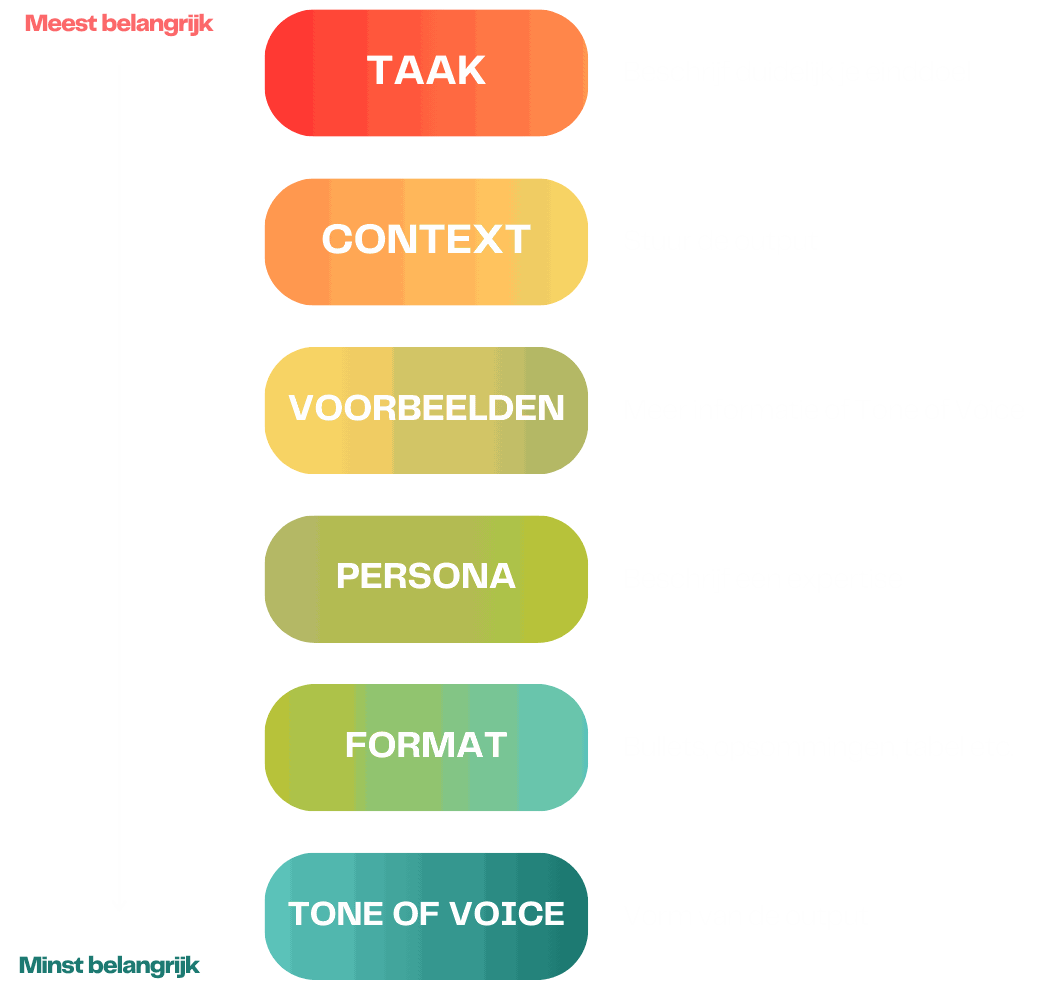
Good prompts contain context, specific instructions, and boundaries. They make clear what you want (and what you don't). This skill is so fundamental that I call it the "new computer literacy." If you don't master this, you'll be stuck with mediocre results.
What I see is that companies that invest time here extract exponentially more value from AI. They develop libraries of effective prompts that they can reuse and refine.
Phase 3: Exploring Niche AI Tools
Now that you've mastered the basics, it's time to look beyond the general language models. There are thousands of specialized AI tools that solve specific problems.
The tool explosion is overwhelming, but also liberating. Where chatbots like ChatGPT are generalists, you now find tools that excel in specific niches:
- ▸Midjourney for generating images
- ▸Miro for converting post-its to plans
- ▸Jasper for marketing content
- ▸Pictory for video editing

What I always advise my clients: start with your biggest pain points. Where do you lose the most time? Which tasks do you find annoying but necessary? That's usually where the biggest ROI lies.
Don't be fooled though, the internet is full of AI tools, most of which are simply tools built on top of ChatGPT, so-called Wrapper tools. So always think: "can I do this myself with a language model?"
Phase 4: Building GPTs and Copilot Agents
Now it gets interesting. Instead of typing the same prompts every time, you're now going to build your own AI assistants that can perform specific tasks.
In recent months I've built dozens of custom GPTs. Including one that helps me make newsletters like this one better. And yes, I definitely still write here myself, I'll make a typo on purposse to prove it ;)
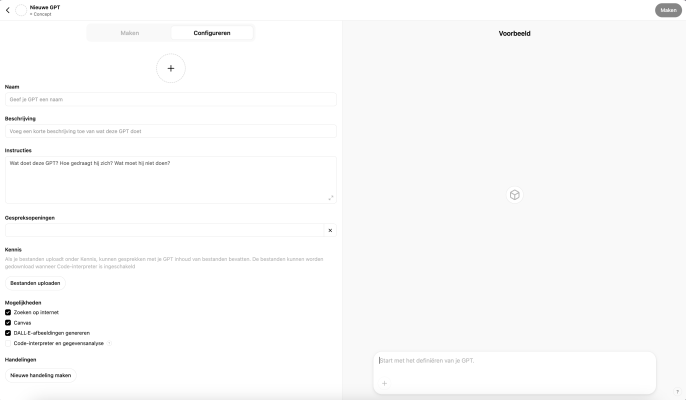
The beauty of this phase is that it's relatively accessible. With OpenAI's GPTs, Claude's Projects or Microsoft Copilot Studio, you can build powerful agents without coding knowledge that:
- ▸Have specific knowledge about your company
- ▸Work consistently according to your guidelines
- ▸Are specialized in one task or process
- ▸Have access to company documents
This is where AI transforms from a nice gadget into a serious productivity tool. You're not just automating tasks, but codifying company knowledge that otherwise exists only in the heads of a few employees.
Phase 5: Automating AI Workflows
In this phase, you go beyond standalone AI tools and start integrating AI into your existing systems and processes.
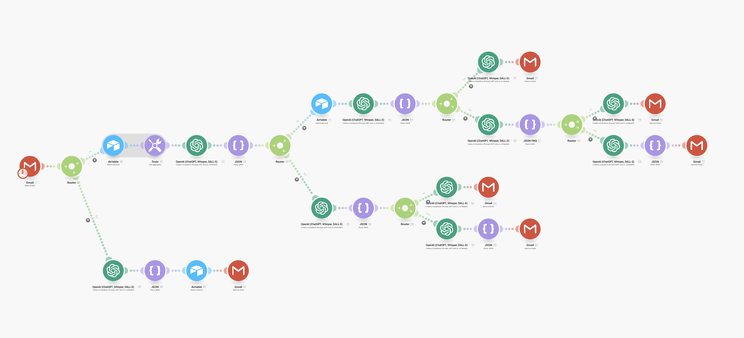
A workflow we implemented at a client last month:
- A customer sends an email with a question
- AI categorizes the question and retrieves relevant information from the knowledge base
- AI generates a draft response
- An employee reviews, adjusts where needed, and sends
This semi-automation reduces handling time by 60% while quality remains consistent.
The technical aspect becomes more important here. You need APIs to make systems talk to each other. You need to think about data flows, security and scalability. But the results are worth it: processes that used to take hours are reduced to minutes.
This is also where we see many companies get stuck. They want to take this step but lack the technical expertise. My advice: start small, with one specific process that delivers high value but is relatively simple to automate. Or hire our expertise, my team specializes in this!
Additionally, you can of course participate in one of the AI Automation trainings at our office, hosted by myself!
Phase 6: Building Multi-Agent Systems
We go one step further. Instead of one AI performing one task, you're now building an ecosystem of AI agents that collaborate to automate more complex workflows.
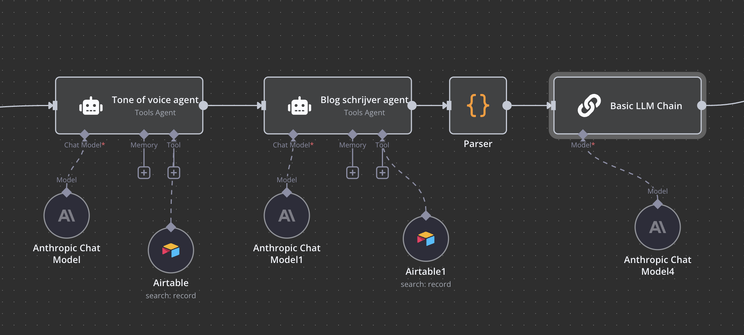
This sounds futuristic, but it's happening now. With tools like N8N or Lindy, you can have AI agents collaborate in a chain. Each agent has its specialty and passes the baton to the next.
An example from our practice: we built a system for an organization where:
- ▸Agent 1 analyzes and categorizes incoming documents
- ▸Agent 2 writes a detailed content assessment
- ▸Agent 3 performs a market analysis for comparable information
- ▸Agent 4 bundles all information into a decision document
- ▸A human employee makes the final decision
The result is a hybrid human-machine process that works 70% faster than the old, fully human process.
These systems require thoughtful design and a good understanding of the underlying processes. You need to know exactly where the limits of your agents lie and where human intervention remains necessary.
Phase 7: Training Custom AI Models
The ultimate step: training your own AI models specifically tailored to your company, industry or niche.
This is still the domain of larger organizations with substantial budgets, but it's becoming increasingly accessible. With techniques like fine-tuning or RAG (Retrieval Augmented Generation), you can adapt existing models to your specific data and needs.
The added value is enormous: models that understand your jargon, are familiar with your products, operate within the rules and constraints of your industry.
An example: fine-tuning a model on thousands of medical documents. The result? An AI that perfectly understands medical jargon, never hallucinates about medical facts, and always stays within strict compliance rules.
This is where the future lies, but it's also a significant investment. For most companies, it's smarter to first go through the earlier phases and only think about custom models when the foundation is solid.
Where Are You on the AI Journey?
Most organizations are currently in phases 1-3. They're experimenting with AI, but don't yet have structural implementation. That's not wrong - these phases are essential to understand what AI can and cannot do.
The real value, however, lies in phases 4-6. There, AI transforms from an interesting technology into a strategic business asset that solves concrete problems and delivers measurable ROI.
What I see in practice: companies that are successful with AI take time for each phase. They don't rest until they've optimized the current phase before moving to the next.
At NinA AI Agency, we help companies through all these phases. Sometimes that's with trainings and workshops, sometimes by doing the implementation ourselves. But always with the idea that AI is a journey, not a destination (yes, I'll keep this AI jargon in, because it's true).
Conclusion: Start Where You Are, But Don't Stand Still
AI implementation is not a one-size-fits-all process. A multinational with a team of data scientists will start differently than an SME without technical knowledge. It's important to start where you are, but even more important to have a vision of where you want to go.
My personal conviction is that the most value lies in phases 4-6. That's where you make the leap from "using AI" to "deploying AI as a strategic advantage." It's also where you encounter the biggest organizational challenges: resistance to change, concerns about job loss, and the need to rethink processes.
The companies that are already leading have one thing in common: they see AI not as a technology project, but as a transformation of how they work. They invest not only in tools, but also in skills, culture and leadership.
I'm curious: which phase is your organization currently in? And what's the biggest challenge you face when scaling to the next phase?
Until next time,
Olaf Lemmens
P.S. Want to brainstorm about your AI implementation strategy? Book a discovery call via tidycal.com/olaf/kennismaking-30-minuten-olaf