Blog · AI & Business
AI Agents - How We Build Them Step by Step
Olaf Lemmens, Founder NinA AI Agency · March 2, 2025 · 8 min read
Last week I was at a potential client who looked at me somewhat skeptically when I told him we could build AI Agents for them. "Isn't that just a fancy term for a chatbot?" he asked. I had to smile – I get this reaction often.
After a demo of one of our recent projects, his expression changed. "This is totally different from what I expected. How do you actually build this?"
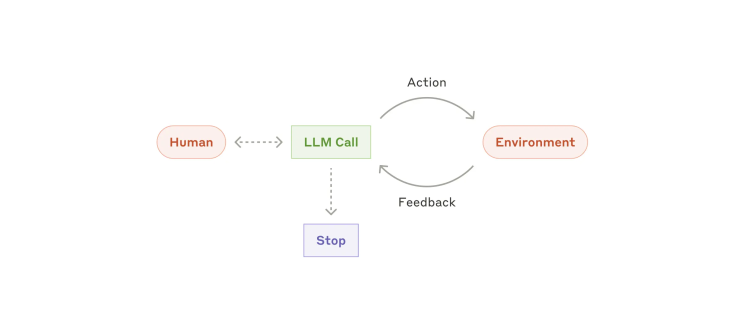
I get that question more and more. Time to give you a peek behind the scenes of how we at NinA AI Agency build AI Agents step by step that truly add value.
And yes, I'm always very open about how we do things. I recently heard that one of our competitors barely gives any transparency into how they will (or won't) achieve that 80% time savings (yes, really). Important to differentiate ourselves in that regard.
TL;DR:
- ▸Our building process starts with in-depth analysis of existing processes
- ▸We build agents that work between existing software – not replacement, but reinforcement
- ▸Everything is hosted in Amsterdam, with strict security standards and bi-weekly feedback rounds
The Genesis of an AI Agent
When people hear "agent," many think of a fully autonomous AI running loose through the company. Nothing could be further from the truth. A good agent is carefully embedded in existing processes.
Where does it start? With the first conversation. This is where I discover the real pain points. Is it really an agent that's needed, or perhaps a simpler automation? By immediately asking about the current process, required integrations, and available data, we quickly get a picture.
The beauty is that we've now built up a portfolio of use cases: Plan writers, Customer Support Agents, Sales Agents, Recruitment Agents, Marketing Agents, WhatsApp Agents. This makes it much more concrete for clients what's possible.
From Idea to Design
After the first conversation, I sit down with my AI developers. This is where the magic happens. We translate the client's wish into technical possibilities. Often different flavors emerge here – some custom solutions simply require more hours than others.
What I'm proud of: we deliver usable POCs from just 30 hours of development. Quick tangible results – after this we've proven that AI can make an impact here, so we can more easily expand and stay connected as an AI Partner.
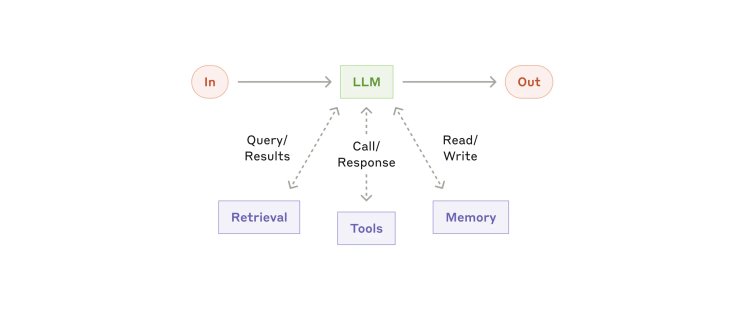
In this phase, we visually map out the process. Where does AI fit in? Which systems do we need to connect? This diagram becomes the blueprint for everything that follows.
Building the Agent Infrastructure
Once we agree on the scope, building begins. This happens in clear steps:
- We develop the prompting strategy for each AI step
- APIs are connected and integrations established
- The flow is built in tools like N8N
- We set up a database for context storage
A fun fact: our hosting is literally a bike ride away from our office in Amsterdam. In a time when data sovereignty is becoming increasingly important, this is a reassuring thought for many of our clients.
The Test and Feedback Cycle
Now comes the phase I value most: testing, testing, testing. Without good test phases and client feedback, we don't deliver what the client wants.
I'll be honest: things have gone wrong here in the recent past. We learned from this that you shouldn't rush through this phase.
An agent can look perfect on paper, but practice is tougher. Sometimes dozens of iterations are needed. This requires patience from the client, but the result is an agent that actually does what it needs to do.
In practice, what we've built often already removes part of the pain, but we see even more potential to expand.
Why Our Approach Works
What makes our approach different? Three factors:
1. We don't replace, we reinforce
Our agents fit between existing software. Companies don't need to switch systems. The agent works as an intelligent link between what's already there.
2. Short sprints, fast results
We work in bi-weekly sprints. Each sprint ends with a concrete demonstration and a feedback round. This keeps momentum high.
3. Technical expertise + business insight
Our three AI developers don't just have technical knowledge. They also understand business processes. Parsing data and writing clever code snippets makes our agents truly effective. Additionally, I look for people with an actual AI background, for example with a master's in Artificial Intelligence on their CV.
A Practical Example
Let me illustrate this with a recent project. One of our clients struggled with generating client reports from their data and converting them into clear updates for the client.
We built an agent that:
- ▸Automatically combined data from different systems
- ▸Converted this data into visually attractive charts
- ▸Wrote in-depth analyses highlighting trends and notable findings
- ▸Generated personalized reports that could be sent directly to clients
The result? What previously took three days now happens in a few hours. The quality of analyses is consistently high, and clients appreciate the faster insights. The team can now focus on strategic advice instead of editing spreadsheets.
The Future of AI Agents
What we're building now is just the beginning. The possibilities are evolving rapidly. Where we currently mainly focus on streamlining processes, I see a future where agents also think along strategically.
But one thing remains constant: successful AI implementation is not about the most advanced technology, but about the right application for the right problem.
Conclusion
Building AI Agents is a balance between technology, process knowledge, and human effort. It's not complicated if you approach it methodically, but it does require care.
At NinA AI we believe that AI should strengthen human work, not replace it. Our agents make work faster, scalable, and often more fun – the repetitive tasks disappear, the human added value remains.
What do you think? Is your organization ready for AI Agents, or are there still barriers to overcome? I'm curious about your thoughts.
Until next time!
Olaf Lemmens
Founder NinA AI Agency
Want an AI Agent too? DM or visit www.nina-ai.nl