Blog · AI & Business
The AI Dark Horse: Why Mid-Sized Companies Are Outpacing Corporates
Olaf Lemmens, Founder NinA AI Agency · March 8, 2025 · 8 min read
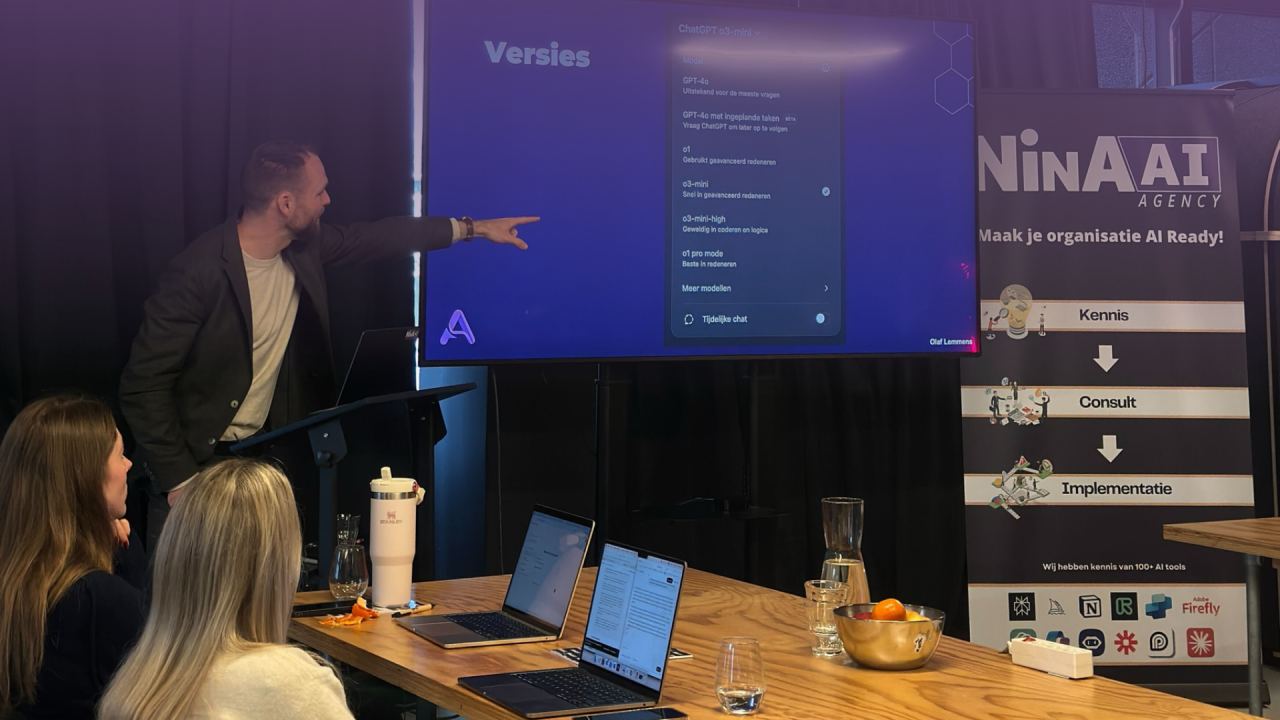
This morning I was chatting with the transcripts of my sales conversations. (Fun own AI project!) To gather knowledge to better align our offering with our customers' pain points.
A pattern immediately jumped out – so clear that I wondered why I hadn't seen it before. While large corporates pump millions into AI strategies with impressive names, it's the quiet mid-sized companies that are achieving the real results.
These are the companies that invite me to take a look. In fact, they all have an AI use case on the table that our AI developers can immediately get to work on!
This is no coincidence.
Where Do You Use AI Agents?
What are these mid-sized companies deploying their AI Agents for:
- ▸Automating their proposal and quotation processes
- ▸Using AI for automatically generating reports and analyses
- ▸Using AI to accelerate their customer service
- ▸Automatically writing content (in bulk) or personalized
What stands out: they almost all focus on practical, directly value-adding applications. No experimental moonshots or five-year plans for general AI transformation.
Why Mid-Sized Companies Are Winning the AI Race
The question is: why are these companies performing so well? After conversations with various CEOs and directors of these 'dark horses,' I see three decisive factors:
1. The Perfect Balance Between Pain and Resources
Mid-sized companies have exactly the right amount of 'pain' to take action. They're big enough to struggle with inefficiency, but not so big that they can ignore it. At the same time, they have sufficient resources to invest in solutions, without the bureaucracy that slows decision-making at large companies.
"We were exactly at the point where our manual processes were costing us growth, but we weren't so sluggish that we first needed six months of strategy sessions." — CEO mid-sized company
2. Decision-Making Authority Close to Operations
At most mid-sized companies, decision-makers are still close to the work floor. They know the daily processes and pain points. When they implement an AI Agent, it's not a theoretical exercise, but a direct solution to a concrete problem.
"I see daily how much time we spend writing quotations. When your demo showed this could be done in minutes instead of hours, the decision was made in one meeting." — Operations Director, technical service provider
3. Realistic Expectations and Pragmatic Approach
Where large corporates often struggle with inflated expectations ("AI will solve everything!"), mid-sized companies usually have a much more pragmatic attitude. They look for concrete, well-defined problems they can solve.
"We don't want an AI revolution. We just want one specific, annoying process to go faster. That's all." — COO mid-sized retailer
The Information-to-Proposal Revolution
A particularly fascinating trend we see at these companies is what I call the "information-to-proposal revolution." Whether it's travel agencies, technical service providers, or logistics companies – they're all transforming how they go from raw information to client proposals.
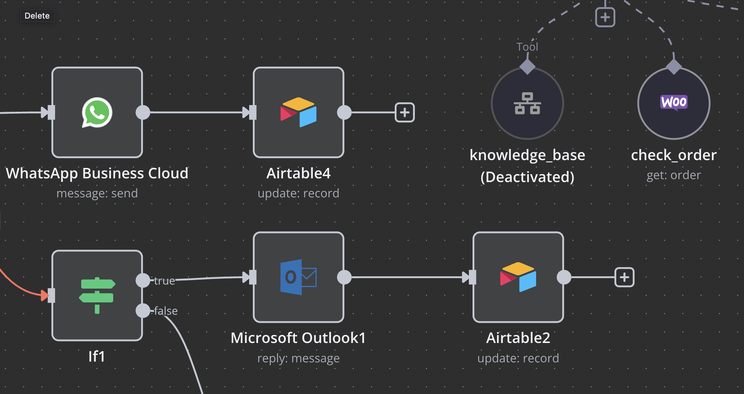
An example:
- Collect customer queries from emails, WhatsApp and web forms
- Extract needs and preferences from often unstructured messages
- Automatically check availability in multiple systems
- Generate a personalized proposal including visually attractive layout
- Send this back for review to an employee, who can send it with one click
The result? Bringing the average response time from hours to minutes. Even more impressive: conversion rates are rising!
Apparently, customers really appreciate it when you come back quickly with a well-thought-out proposal.
I'm now seeing this approach in virtually every sector:
- ▸An installation company converting technical specifications into detailed quotations
- ▸A marketing agency transforming briefings into campaign proposals
- ▸A logistics company translating transport requests into priced services
What they have in common: they let AI work precisely where human experts lose valuable time on administration and formatting – instead of adding value with their expertise.
The Power of Feedback: Our Mid-Term Evaluation This Week
Last Wednesday we had a mid-term evaluation at the office with one of our clients. We deliberately chose an informal format – a live demo of their workflow, good lunch, and an open conversation.

This brought more valuable feedback to the surface in two hours than we normally collect in weeks.
This direct, unpolished feedback is worth its weight in gold. It enables us to substantially improve the Agent within the next sprints.
Now comes the challenge, because who doesn't know the 80/20 rule – most of the work is in the last 20 percent of every project!
The AI Agent Flywheel: Why Speed Is So Crucial
A pattern I keep seeing in successful implementations with our clients is what I call the "AI Agent Flywheel." Instead of striving for the perfect AI solution from day one, we build iteratively:
- We start with a specific, well-defined problem
- Implement a first solution after 1 to 2 months
- Collect direct user feedback
- Improve quickly and launch version 2.0
- Then expand to adjacent processes
This approach creates momentum. People see results, get enthusiastic, and identify new possibilities. The whole process accelerates itself.
Contrast this with what I often see at larger organizations: months of preliminary studies, stakeholder alignment sessions, and extensive RFP processes. By the time they start building, the initial energy has already faded.
We'd rather have 80% of the value today than 100% next year.
Lessons for Every Organization
What can all companies – regardless of size – learn from our clients?
1. Start small, but start now
Choose one specific, painful process where AI can add direct value. No abstract transformations, but concrete pain points. Think of quotation processes, reports, or data analysis.
2. Implement in sprints, not projects
Focus on short cycles of 2-4 weeks in which you deliver working functionality. Collect feedback, iterate, and build further. An imperfect agent that gets used is infinitely more valuable than a perfect agent on paper.
3. Bring decision-making close to operations
Make sure the people who will work with the AI Agent also have input in its development. Their practical insights are often more valuable than abstract strategic visions.
4. Manage expectations realistically
Don't promise an AI revolution, but concrete improvements in specific processes. Underpromise, overdeliver.
5. Invest in feedback mechanisms
Explicitly create space for users to give feedback – informal, frequent, and without judgment. The lunch-and-learn sessions we now schedule as standard deliver unprecedented valuable insights.
Conclusion: The Quiet Revolution Has Already Begun
What fascinates me most about this trend is how under the radar it all happens. While the headlines are full of stories about ChatGPT and the future of AGI, thousands of mid-sized companies are quietly transforming how they work.
They're not doing this with revolutionary technology, but with a revolutionary mindset: pragmatic, results-oriented, and without AI hype.
I predict that in two years we'll look back and conclude that the real AI revolution didn't start at the tech giants or the Fortune 500, but at the quiet mid-sized companies that simply wanted to do their work better.
What do you think? Is your organization more like an agile mid-sized player or a sluggish corporate when it comes to AI implementation? And what could you learn from the pragmatic approach of these dark horses?
Until next time!
Olaf Lemmens
Founder NinA AI Agency
P.S. Check out www.nina-ai.nl