Blog · AI Trends
This Was The Week In AI #38
Olaf Lemmens, Founder NinA AI Agency · July 6, 2026 · 7 min read
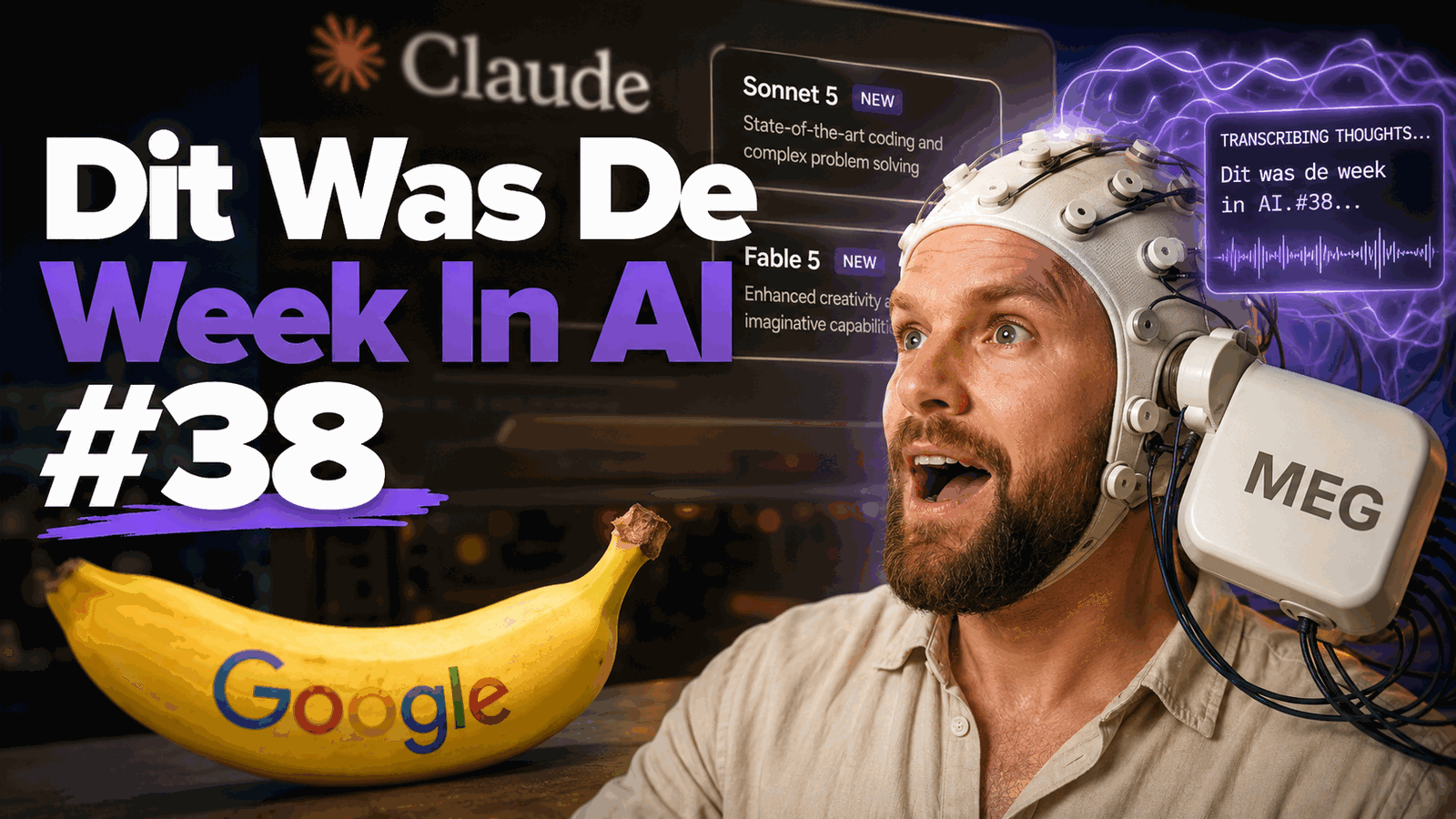
For eighteen days the most powerful AI model in the world was out of reach. This week it came back.
But that is not the only news. Anthropic immediately slid in a second model that performs almost as well for half the price. Google made AI images four seconds fast and dirt cheap. And Meta? They now read your mind. Literally, without surgery.
Four stories that look unrelated at first glance, but together show one thing: the pace is not slowing down. Quite the opposite.
In this newsletter we line it all up: the return of Fable 5 and the conditions attached to it, why Sonnet 5 might be the most interesting model right now, what Google’s new media models mean for creators, and how Meta turns brain signals into text.
This was the week in AI #38.
TLDR;
Anthropic lands two big ones: Fable is back, Sonnet 5 is new
Google makes AI images in 4 seconds, dirt cheap
Meta decodes thoughts into text without surgery
The best AI model in the world is back
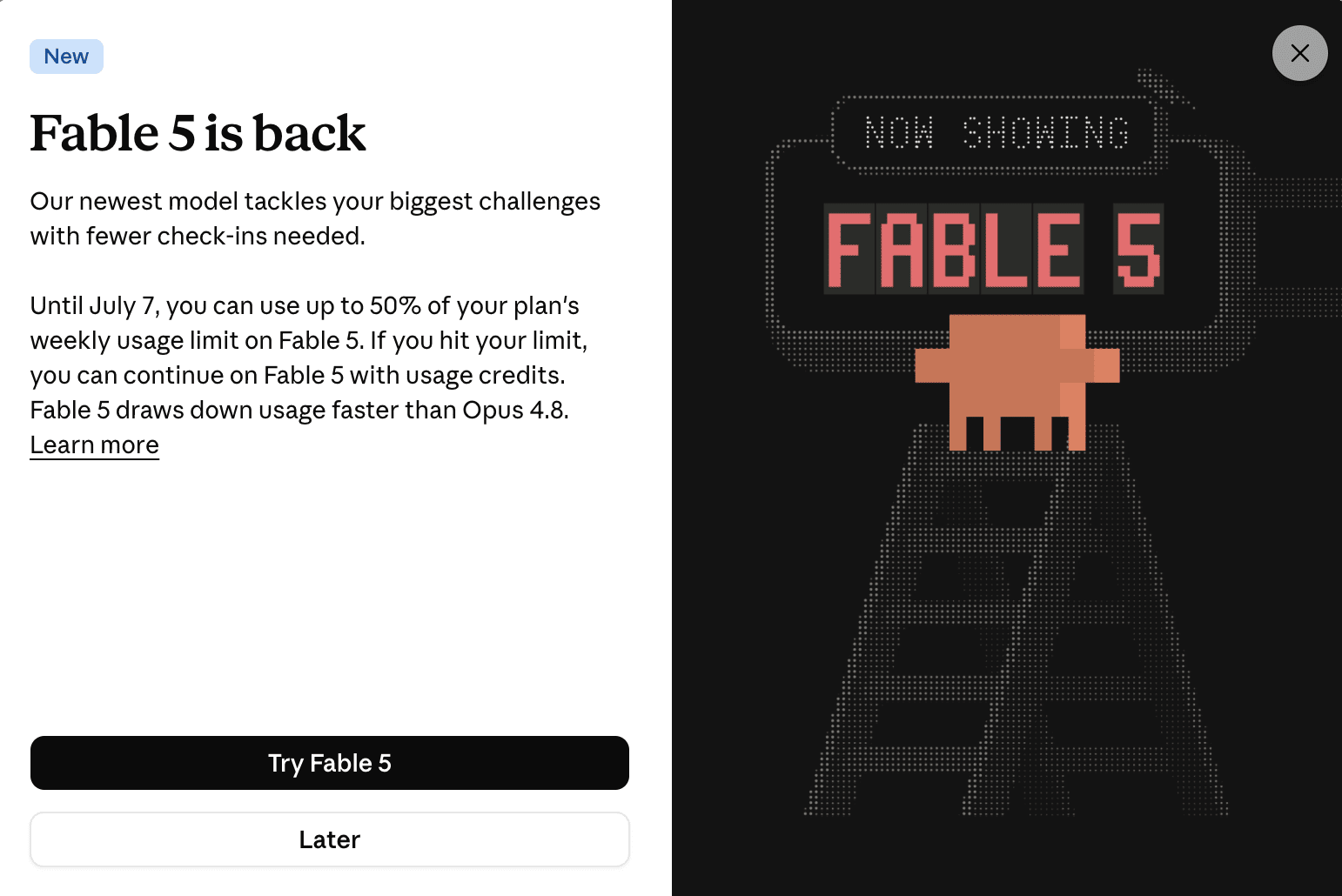
Fable 5 from Anthropic launched in early June and, by almost every test, was by far the most powerful model in the world. It was online for just three days before the US government stepped in with export restrictions. Last Tuesday, after 18 days, those were lifted again.
Fable 5 is now officially back in Claude. With a Pro, Max or Team subscription the model is included through 7 July for half of your weekly limit. After that you pay per use through credits.
There is a catch. Fable returns with a stricter safety filter that blocks the cybersecurity problem in more than 99% of cases. Sometimes the filter also catches innocent programming questions, although the vast majority of coding work should not notice anything.
Going forward, the US government gets access to future Anthropic models in advance, before the public release.
Testers described a model in a different category. Dan Shipper of Every called it the best programming model in the world. Payment provider Stripe used it to finish a job in one day that would otherwise take a team two months.
Google makes AI media faster and cheaper
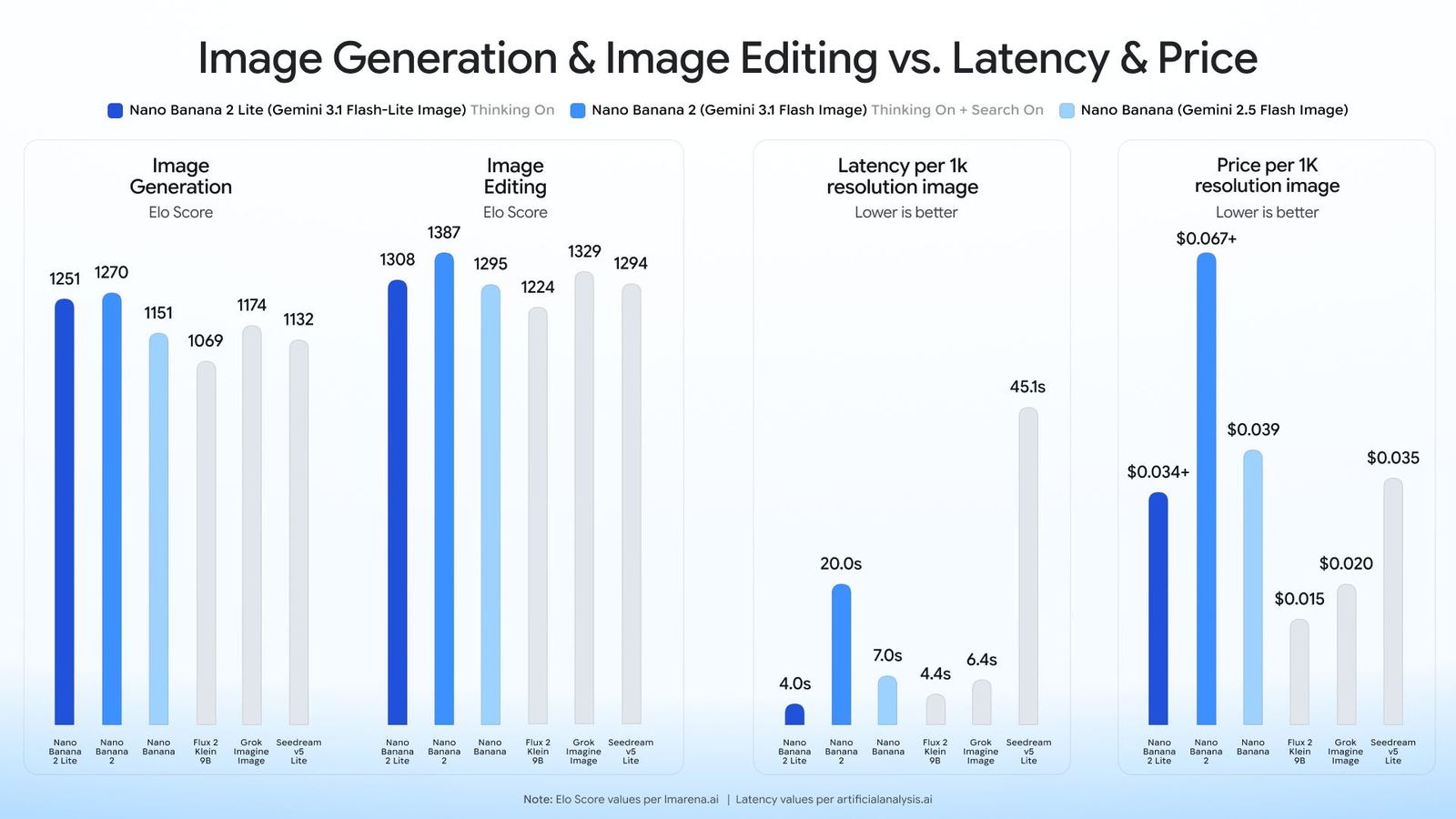
Google does not want you waiting for your AI images any more. Four seconds. That is the new wait time for image generation.
The company launched Nano Banana 2 Lite, a cheaper and faster version of its Gemini image model. It also released Gemini Omni Flash: a model for video generation and conversational editing. The prices are strikingly low. Nano Banana 2 Lite costs $0.034 per thousand images, Omni Flash $0.10 per second of video.
To be clear: this is not aimed at perfect output on the first try. Google is targeting developers who want to iterate quickly inside real products. Speed over perfection, in other words.
The interesting part is the breadth. Google is pushing both models into AI Studio, the Gemini API, enterprise tools and consumer products like Search, Photos, Flow and Ads. The same models everywhere, the same speed everywhere.
Image generation can now flow straight into short video workflows. Up to three consecutive edits are kept in the session context. That makes lightweight creative apps considerably easier to build. Think of teams in commerce, design and social content working through their concepts on a laptop.
Fast and cheap sounds good. But in practice it still has to stay usable.
Anthropic launches Sonnet 5: near-Opus quality for a fraction of the price
While everyone is still talking about the return of Fable 5, Anthropic quietly slides in another model: Claude Sonnet 5.
And that is more interesting than it sounds. Because Sonnet is Anthropic’s mid-range, the model most people use daily. For developers, the agent era once started with Sonnet models. Lately the big jumps have been in the pricier Opus class.
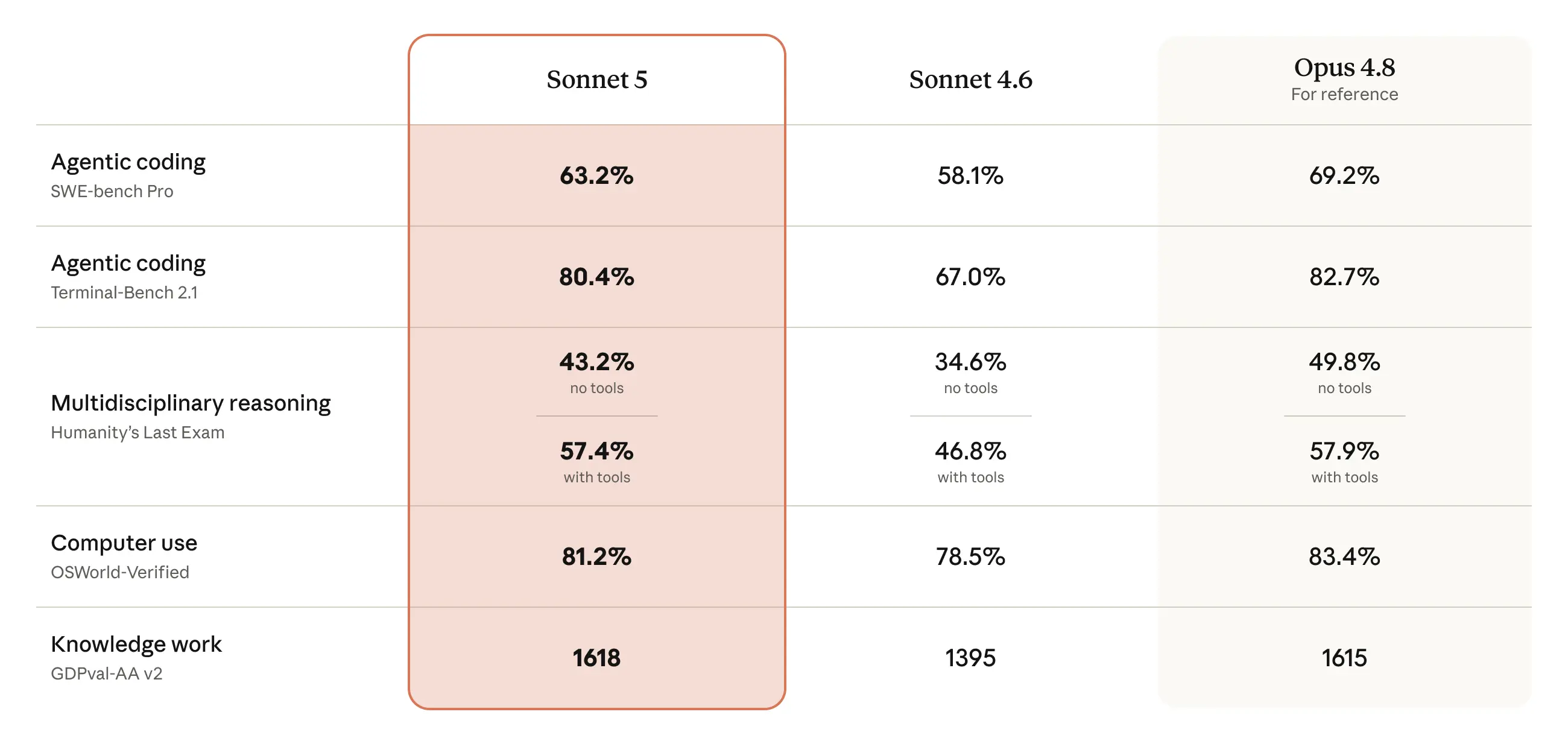
Sonnet 5 narrows that gap considerably. Performance comes close to Opus 4.8, but at lower cost. The model plans independently, uses tools such as browsers and terminals, and finishes tasks where earlier Sonnet versions stalled halfway. Testers even report that it checks its own work without being asked.
Notable, certainly after the Fable drama: Anthropic pushes straight through on safety here. Sonnet 5 hallucinates less, holds up better against prompt injection and scores lower on unwanted behaviour than its predecessor. On dangerous cybersecurity tasks the model deliberately performs considerably worse than Opus and Fable. Even so, the cyber safeguards are on by default. Anthropic is clearly done taking risks.
Meta reads your mind. Without surgery.
It sounds like science fiction, but it is a research paper: Meta can turn brain activity into text. No implant, no surgeon, no hole in your skull.
The project is called Brain2Qwerty v2 and it is the successor to the first version Meta showed last year. The idea: participants wear an MEG scanner (a kind of advanced helmet that measures magnetic brain signals) while they type. An AI model then learns to translate the brain signals directly into the sentences they are typing.
The numbers are impressive. Meta trained the system on around 22,000 sentences from nine volunteers, each measured for ten hours. The result: a word accuracy of 61%. For comparison: earlier non-invasive methods were stuck at 8%. With the best participant the system even reached 78%, decoding more than half of all sentences with at most one word error.
To be clear: this level of accuracy was until now only achievable with brain implants. So with surgery.
Millions of people worldwide cannot communicate because of brain injury. Implants can help, but brain surgery is hard to scale. Putting on a helmet is not.
And it can get better still. Meta found that accuracy increases predictably with more data. The gap with surgical methods could therefore be closed by simply measuring more.
Notable: Meta is releasing everything. The training code for both versions is public, and research partner BCBL is sharing the dataset. Meta is also putting $5 million into a fund for open brain datasets.
An MEG scanner is still a sizeable machine, so do not expect a mind-reading headband at the electronics store tomorrow. But the direction is clear: restoring communication without going in with a knife. And that is a win.
My take
Honestly: the return of Fable 5 feels like good news with an aftertaste. Good that the model is back, because it is an incredibly good model. But the price is steep. Stricter filters, paying through credits, and a US government that will now be the first to look at new models. That last part is what strikes me most. The relationship between AI labs and Washington keeps getting closer, and the question is whether users are better off for it.
For most readers Sonnet 5 is actually the more important news. Fable is impressive, but most people work with the mid-range every day. And that mid-range now comes close to top performance for less than half the price. My advice: just try it. It is probably already in your subscription.
Google’s fast media models fit a pattern I have been seeing for a while: it is not the best model that wins, but the fastest and cheapest one that is good enough. For teams making visuals daily, four seconds per image is a meaningful difference. Perfection is nice for demos, iteration speed wins in practice.
And Meta? That is the story that sticks with me longest. Turning thoughts into text without surgery sounded like pure fantasy two years ago. Now we are at 61% accuracy and that line rises predictably with more data. For people who cannot communicate because of brain injury this is potentially life-changing. At the same time we should stay level-headed: this is research, not a product. But the direction is clear.
Until next time,
Olaf Lemmens
Founder NinA AI Agency
P.S. Want to talk through how AI could work in your organisation? Or how tools like these could save you time in your work? Book an intro call through this link.