Blog · AI & Creativity
Can AI Really Be Creative – or Is It Pure Imitation?
Olaf Lemmens, Founder NinA AI Agency · March 22, 2025 · 8 min read
A debate that divides artists and technologists worldwide.
Last week I had the opportunity to speak about AI to several groups and the discussion about creativity flared up once again. A topic I think about a lot and have read countless pieces about. A videographer passionately claims that "AI can never truly be creative" while an AI researcher says "we need to revise our definition of creativity."
Time to reflect on it in my newsletter.
Sam Altman tweeted on March 11 about the new OpenAI model (4.5) which he says writes extraordinarily creatively - the first AI-generated story that truly moved him.
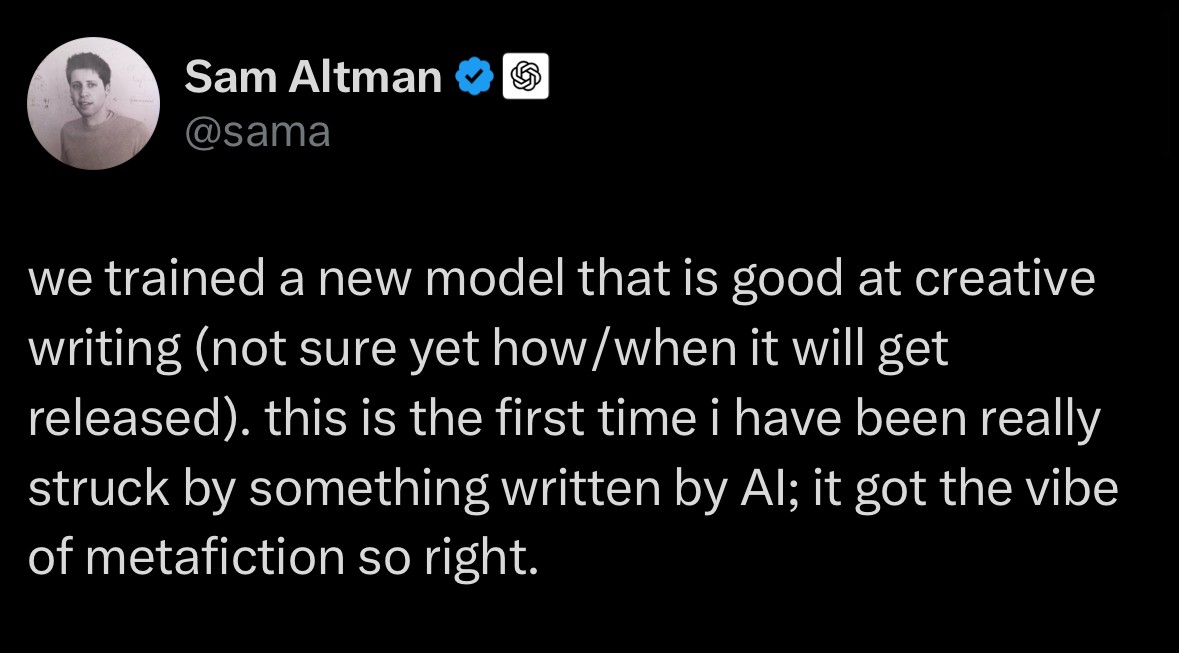
But is that real creativity or just a very advanced imitation?
As I organized my thoughts on this and dug deeper, I realized that this debate about creativity reveals much more about ourselves than about the machines we build.
TL;DR:
- ▸There are three types of creativity: combinational, exploratory and transformational - AI currently masters only the first two
- ▸From generalists to specialists: while AI becomes broad but shallow, humans distinguish themselves through deep, specific creativity
- ▸Practical case: how AI automation at a client freed up time for human connection and increased conversion
What Does Creativity Actually Mean?
When we discuss AI and creativity, I find we often talk past each other because we use different definitions.
When we claim that AI can or cannot write creatively, we are actually projecting our own beliefs about what creativity entails.
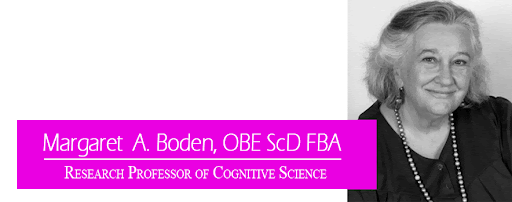
Cognitive scientist Margaret Boden has divided creativity into three categories:
Combinational creativity: Unexpectedly combining existing ideas. Think of a chef fusing Spanish and Thai cuisines.
Exploratory creativity: Discovering new ideas within an existing conceptual framework. Like a chef pushing the boundaries of contemporary Spanish cuisine.
Transformational creativity: Fundamentally changing a known domain so that entirely new structures can emerge. Compare it to a chef who redefines what is considered food in the first place.
Recent research concludes that current language models are at most capable of combinational and exploratory creativity.
Transformational creativity - the kind James Joyce demonstrated with Ulysses by completely redefining the novel form - remains beyond AI's reach.
The Lovelace Test: A Yardstick for Machine Creativity
In 2001, three computer scientists introduced the Lovelace Test as an alternative to the Turing Test, specifically aimed at measuring creativity in machines. A program passes this test if it produces something that its creator cannot explain based on the design, algorithms or knowledge base.
It must genuinely surprise its creator in a way that suggests the system has created something original, rather than recombining or repeating existing patterns.
By this standard, current language models still fall short.
They are trained on existing texts and can cleverly recombine these patterns, but they cannot yet surprise their creators with something fundamentally new that cannot be traced back to their training.
The Human Struggle
Virginia Woolf described the writing process as "a breathtaking pain." Nick Cave called it "a blood-and-guts affair, here at my desk."
This touches on a crucial point: writing is for humans often a struggle deeply connected to the larger battle of life itself. The melancholic role of AI, as Cave noted, is that it is doomed to imitation and can never have an authentic human experience.
An important aspect of creativity where AI falls short has to do with our subconscious.
People who believe that creativity is rooted in real human experience (as opposed to accounts of it in training data) deny that non-conscious AI can ever truly write creatively.
In other words: AI can describe in remarkable detail how sour a lemon tastes, but has never actually recoiled from the sharpness of its juice.
From Generalists to Specialists: The Reverse Evolution
There is a fascinating irony in the current development of AI and human skills.
Language models are becoming increasingly generalist - they can do a bit of everything, but lack the depth and nuance in specific domains. They are a kilometer wide but a centimeter deep.
Humans, on the other hand, are evolving in the opposite direction. In the AI era, we increasingly distinguish ourselves through hyper-specialization and deep, domain-specific creativity rooted in years of experience and expertise.
I see this daily with our clients. The most successful professionals are not those who try to compete with AI on breadth, but those who deploy their unique human creativity and specialist knowledge to go deeper than AI ever can.
From Automation to Human Connection: A Success Story
A recent case study perfectly illustrates how AI can automate routine tasks to make room for truly human creativity. For a medium-sized organization, we automated the entire proposal process with AI.
Previously, the sales team spent an average of 6 hours per proposal manually drafting proposals, calculating prices and compiling relevant cases. With our automated system, this has been reduced to just 20 minutes per proposal. The system:
- Analyzes client needs from intake conversations
- Automatically selects relevant services and cases
- Calculates complex pricing models based on project scope
- Drafts a personalized proposal in the right tone-of-voice
The result?
The sales team now uses the freed-up time for personal contact with potential clients - in-depth conversations about their specific challenges and needs. It is precisely this human aspect, which AI cannot duplicate, that has led to a conversion rate 37% higher than before.
This is what I mean by the complementary power of humans and machines. AI takes over the repetitive, predictable tasks, so that people can excel at what is truly human: empathy, creativity and meaningful connection.
In the Eye of the Beholder
Mark Twain wrote: "For substantially all ideas are second-hand, consciously and unconsciously drawn from a million outside sources." Twain anticipated the popular belief that originality is an illusion - that all creativity is essentially derivative.
Traditionally, in literature the author is celebrated as a unique creative genius. Postmodernist thinkers disputed this - they argued that the meaning of a text comes from the reader's interpretation, not the writer's intention.
In his 1986 essay "Cybernetics and Ghosts," Italo Calvino dreamed of machines that can write, and predicted: "Once we have dismantled and reassembled the process of literary composition, the decisive moment of literary life will be that of reading."
According to this line of thinking, creativity lies not in the hand of the writer - human or AI - but in the reader's willingness to create meaning.
What This Tells Us About Ourselves and AI
At NinA AI Agency, we have built numerous AI systems for creative applications. One of our most successful projects was an AI that generated variations on marketing texts, some of which were labeled "brilliant" by clients.
Was that real creativity? It depends on who you ask.
I started my research on this topic hoping to find a binary answer: either AI can write creatively, or it can't. But my honest conclusion is that creativity exists on a spectrum.
Language models are creative - if you see creativity in the processes of combination and exploration, or if you believe that meaning ultimately lies in the reader's interpretation.
But if you believe that true creativity requires human experience, unconscious incubation or a fundamentally new way of thinking, language models still have a long way to go.
Conclusion: Redefining Creativity in the AI Era
As AI systems become increasingly sophisticated, we are forced to sharpen our definitions of typically human traits like creativity. This is not a threat, but an opportunity to understand more deeply what it means to be human.
Perhaps the value of AI creativity lies not in replacing human writers, but in exploring new combinations, ideas and perspectives that can inspire people.
Just as a guitarist plays jazz with a drummer, humans and AI can co-create in ways that neither could alone.
What do you think? Is AI-generated art and literature "truly" creative? Or is that reserved only for humans? And more importantly: does it actually matter?
Until next time,
Olaf Lemmens
P.S. Want to brainstorm about how AI can strengthen your creative processes? Or write your proposals? Book a discovery call via tidycal.com/olaf/kennismaking-30-minuten-olaf