Blog · AI & Wearables
Meta's €899 AI Glasses Failed Live on Stage. And That's Why It's Genius.
Olaf Lemmens, Founder NinA AI Agency · September 20, 2025 · 10 min read
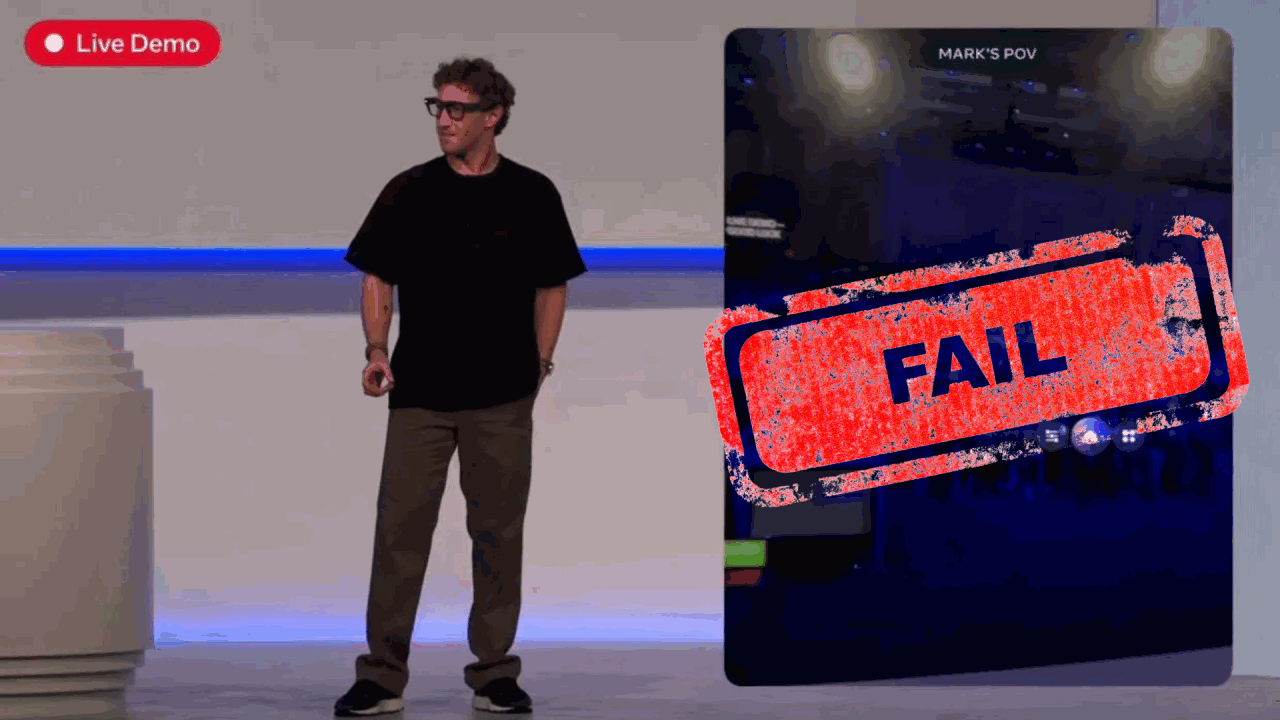
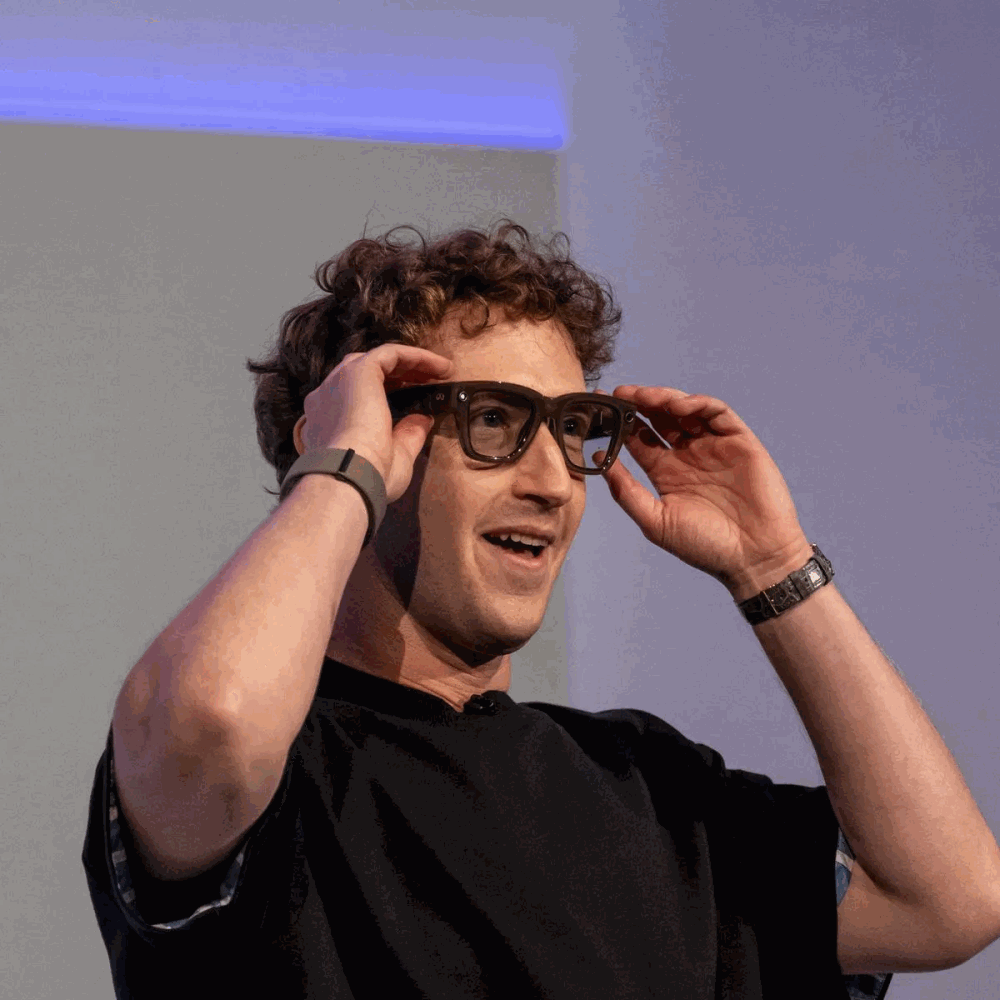
Yesterday I was watching Meta Connect 2025. Mark Zuckerberg stood proudly, in his trendy outfit, presenting his new Ray-Ban glasses. €899 for glasses with a built-in display.
Then the WiFi crashed. The video call didn't work. The AI assistant misunderstood everything.
Live. For millions of viewers.
And I thought: "This is perfect."
No, seriously.
This live failure on stage tells us more about the future of AI wearables than any glossy marketing pitch. Because what Meta did there, we do at NinA AI too.
We fail really often, but through that failure we also make the biggest leaps where we don't. That's also why so many companies want to work with us, from well-known to unknown. Whether it's our approach in knowledge or full implementation.
This is exactly how we help companies stay ahead of the rest.
And now I saw it happen at a billion-dollar company too. WOW!
TL;DR:
- •Meta's Ray-Ban Display (€899) combines AI, display and neural band control.
- •For businesses there's a €10,000+ opportunity in field service, logistics and training.
- •The real disruption isn't in AR/VR but in "invisible computing"
The €899 question
Let's be honest. €899 for glasses that might not even work during a live demo?
McKinsey predicts the wearable AI market will be worth $230 billion in 2026. But here in the Netherlands, we're still debating whether ChatGPT is safe enough for business use.
These glasses aren't meant for consumers. It's a Trojan horse for enterprise adoption. Just like the first iPhones were bought by executives who "wanted to check email," these glasses will be bought by early adopters who "want to work hands-free."
What Meta is actually building (hint: it's not glasses)
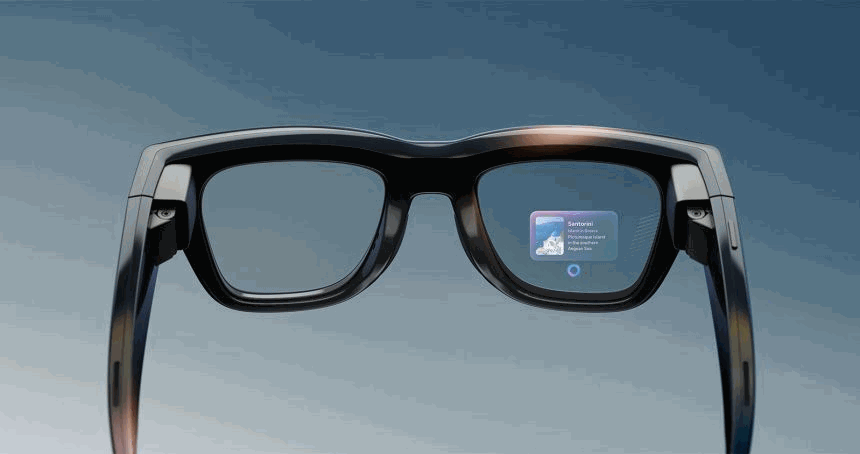
The Ray-Ban Display has three game-changing features:
- 1Built-in color display in the right lens: for live translations, navigation, notifications
- 2Neural band wristband: detects muscle signals for gesture control
- 36-hour battery (30 hours with case): just enough for a workday
But this isn't about specs. It's about behavior change.
A client of ours, a major logistics player, talked about their biggest problem: warehouse workers constantly picking up their scanner, entering data, putting it down again. Average time lost? 47 minutes per day per worker.
With 500 workers that's 23,500 minutes per day. That's €2.1 million per year in wasted time (at €30/hour).
An €899 pair of glasses that solves this? Return on investment in 2 months.
Why the failed demo is actually good news
Most people see this as failure. I see it as transparency.
RAND Corporation's latest research shows: companies that are open about technical challenges have 73% higher adoption rates than companies that promise perfection.
"Because you know what's really scary? A big tech company that claims everything works perfectly."
Let's learn from this in the Netherlands
In Silicon Valley they're already experimenting with installers getting live instructions in their field of vision, surgeons seeing patient data without looking away, and warehouse workers picking orders with 34% higher efficiency.
Meanwhile in the Netherlands, we're still debating whether AI is "ready."
Newsflash: AI is never "ready." It evolves. Daily.
At NinA AI Agency we're already building custom AI agents that integrate with existing systems. A client in construction now saves 6 hours per week through automatic project documentation via AI. Imagine what happens when that AI isn't on a screen, but in your field of vision.
The elephant in the room: Privacy
Yes, there's a camera in the glasses. Yes, Meta has access to the data. Yes, this is scary.
But let's be realistic. Your smartphone tracks your location 24/7, listens in, has access to ALL your photos, and knows more about you than your partner.
The Ray-Ban Display isn't scarier than what's already in your pocket. It's just more visible. And that might actually be better.
Practical use cases
🏭 Manufacturing & Logistics
- • Live translation for international teams
- • Quality control with automatic defect detection
- • Remote assistance without a laptop
🏥 Healthcare
- • Patient records (partially) in field of view during consultations
- • Live transcription of patient conversations (GDPR compliant)
- • Medication verification via visual AI
🛍️ Retail & Hospitality
- • Instant product information for sales staff
- • Live sentiment analysis during customer conversations
- • Automatic inventory updates via visual scanning
Apple vs Google vs Meta's approach
- Apple Vision Pro: €3,499 — "spatial computing" for tech enthusiasts
- Google Glass 2.0: Focused on enterprise, no consumer launch
- Meta Ray-Ban: €899, looks like a normal Ray-Ban
Meta understands something the others miss: "adoption happens through familiarity, not innovation." BCG's latest report confirms: 67% of successful tech adoptions happen when new technology looks like existing products.
My personal opinion (and why I'm buying one anyway)
I'm not going to lie. These glasses are an expensive gadget that probably won't work half the time as promised.
But you know what? The first iPhone crashed constantly too. The first Teslas had panel gaps you could put your hand through. The first version of ChatGPT hallucinated more than 25-year-old me at a festival in Amsterdam.
Early adoption isn't about perfect products. It's about understanding where technology is heading.
The question isn't WHETHER this becomes the future. The question is whether you'll lead or follow.
At NinA AI Agency we choose to lead. We're already building the AI infrastructure that will seamlessly integrate with these new interfaces. Because while everyone waits for the "perfect" solution, we just keep building. With practical, incremental steps. As it should be in the Netherlands.
What now?
The Ray-Ban Display is coming to the Netherlands late September. Probably for €999-1099.
My advice?
Don't wait for these glasses. Start NOW preparing your AI infrastructure. Because the hardware is just an interface. The real value is in the AI agents and automations running behind it.
Because ultimately it's not about the glasses. It's about what you do with them.
This time we can't wait 5 years. This time we need to move NOW.
The demo may have failed. But the future? It's coming anyway.
With or without you.
What do you think? Is €899 too much for glasses that occasionally fail? Or would you rather wait for version 3 when everything is "proven"?