Blog · AI Startup
The Human in Our AI Machine
Olaf Lemmens, Founder NinA AI Agency · April 21, 2026 · 7 min read
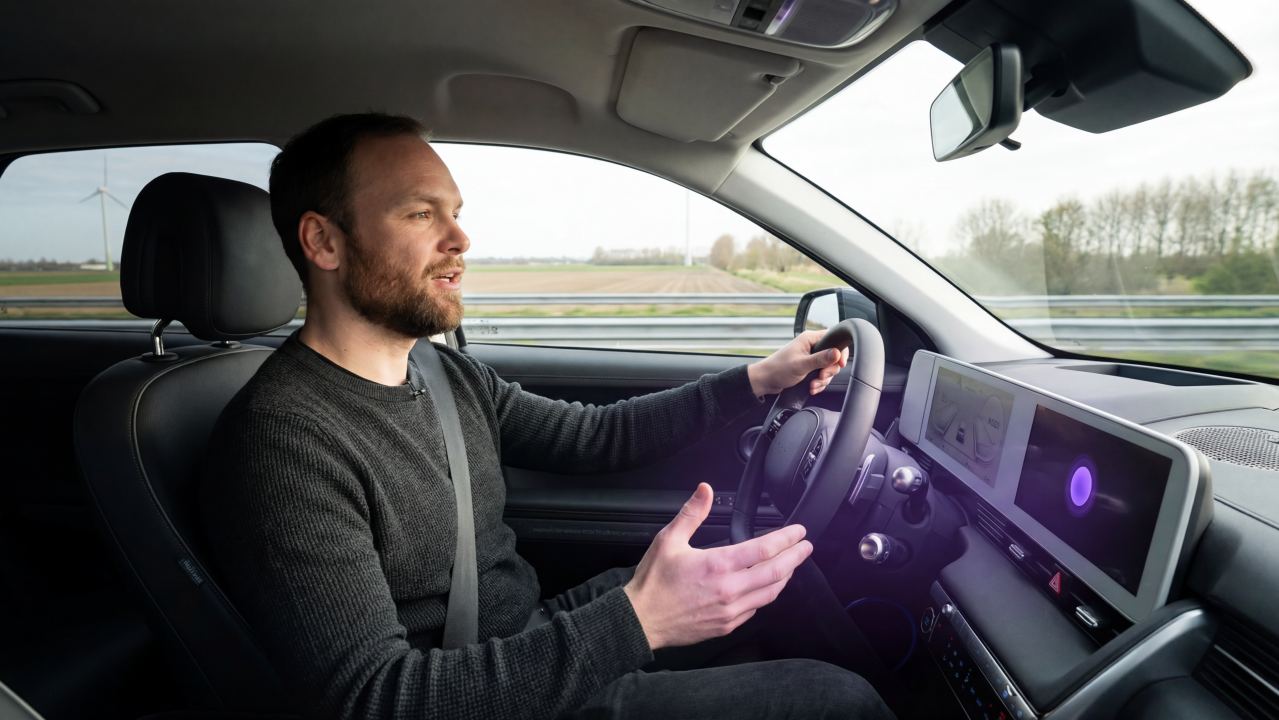
Monday evening, 11pm. Back home. Just finished a day at a client in the east of the country. Two hours there, three hours on-site, two hours back. Plenty of tasks still on my to-do list. LinkedIn content, a job post, a project plan, the April numbers. But this time investment was more than worth it.
I'm thinking about a sentence I've said three times this week in client meetings:
"Ultimately, the human is the most important factor in our work."
That might sound strange coming from someone who builds AI agents.
But it's exactly why we keep growing.
TL;DR
We build AI agents and we keep hiring more people. Not despite AI, but because of AI. The companies that succeed with AI organize more humanity, not less. Physical presence, listening, and human in the loop aren't a cost — they're our biggest differentiators.
"Is AI going to take our jobs?"
When I walk into a new client, the same thought is almost always somewhere in the room: "Is AI going to take our jobs?"
Usually nobody says it out loud. You see it in certain employees' eyes when AI comes up. In the questions of a director who's enthusiastic and nervous at the same time. In the defensive joke halfway through the AI workshop.
I get the reflex. Headlines don't help. "AI replaces 300 million jobs." "This role disappears within three years." "Companies can now do without a sales team."
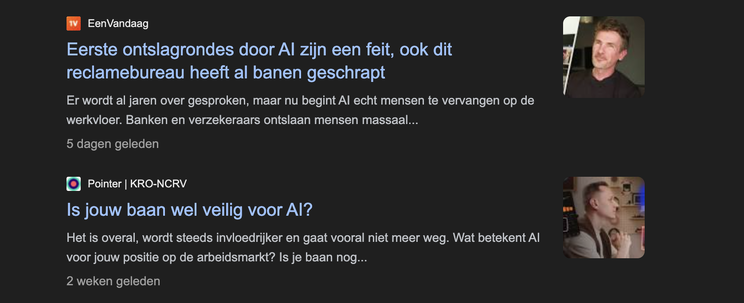
I don't believe any of that doomerism. And last week, on the way back from a client, I remembered why.
What we do before the kick-off begins
Last week we had our first working session at a large consultancy. I hadn't even opened my laptop in the first hour. No slides. We started by walking around the workplace, talking to an expert, looking at their processes. Only then did we talk about what AI could do there.
Afterwards the director said: "What strikes me is that you don't start with the technology."
That's no accident. It's a choice. 90% of our new clients start with a physical kick-off, not a Teams call. Yes, it's expensive. But you know what's more expensive? A project that stalls after three months because nobody really understood what the client meant.
Why we increasingly put someone on-site for a day
This week we introduced a new role internally: the AI Consultant on-site. Literally: one of our people sits at the client's office for at least a day.
Not to give presentations. To listen. To stand by the coffee machine. To see what people really do when nobody's watching. To pull knowledge out of heads that would otherwise never end up in a document.
Projects that previously got stuck on "the client has no time to provide information" suddenly ran smoothly. Within six weeks there was a working AI tool used by the entire team. No resistance. Only enthusiasm, because people saw that AI made their work lighter, not replaceable.
AI can build the workflow. No AI can stand next to someone at the printer and ask: "What exactly do you mean?"
Our growth path (with people)
We're ten now. This week three openings are live. That means we'll soon be thirteen people.
On paper that's strange. We build agents and automations. You'd think we'd be the first to shrink. The opposite happens. The more we deploy AI at clients, the more people we need. Not to push buttons. To guide, listen, translate.
One of our developers put it better than I can: "AI only scales if people keep it human."
What human in the loop really means in 2026
Everyone has heard the term by now. "Human in the loop." Usually as reassurance: don't worry, the human stays in control.
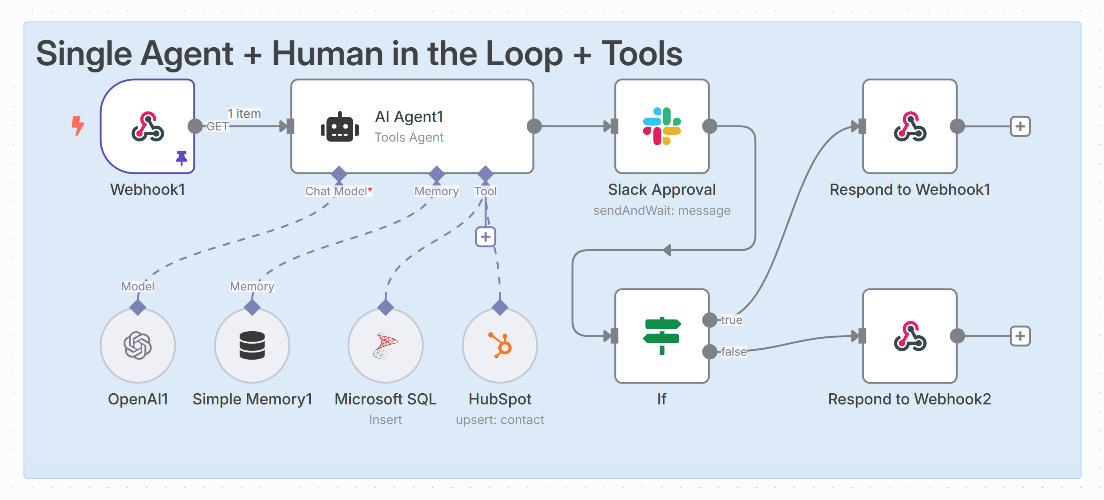
For me it's not reassurance. It's the assumption we build under. Three concrete examples from last week:
One. At a construction client our AI tool turns information into plans of 30+ pages. It works on dummy data. But for the final plans, a human always checks. Not as formality. As necessity. A wrong number in a construction budget costs hundreds of thousands.
Two. At a client our AI analyses incident reports. The tool connects the dots. But the expert still walks the floor physically. No model in the world sees what a trained eye sees.
Three. At a sustainability consultant our tool checks audit documents against standards. But the final judgment about double glazing, about the feel of a building? That remains a human standing there.
Four things I've learned about this combination
One. People make AI better, AI makes people better. Not the other way around.
Two. Physical presence isn't romantic, it's profitable. On-site clients generate more revenue per month than remote clients.
Three. The people who work best with AI aren't the techies. They're experienced craftspeople who know their work inside out.
Four. The rate isn't the pain point. Clients understand you can't send someone for less if you take the day seriously.
What I keep believing
We could have chosen a different path. Bigger margins through fewer people. Scalability through remote-only. A company that runs like a machine.
I deliberately didn't make that choice. Not because I'm against growth. Precisely because I believe the companies that will get the most out of AI will do so by organizing more humanity, not less.
That's what we deliver. That's why we grow. And that's why, despite everything on LinkedIn about AI making people redundant, I keep hiring people.
We're looking for you
Three roles open. A developer, an SDR and a CTO. No theoreticians. People who want to listen, ask questions, and then build. If that sounds like you, check nina-ai.nl/vacatures.
Someone recently asked me: "Is your company an AI agency or a people agency?"
My answer: yes.
Until next time,
Olaf Lemmens
Founder NinA AI Agency
P.S. Want to experience what it's like to be our client? Schedule an intro call. Or visit www.nina-ai.nl